












Karva Chauth is a popular Indian festival that is predominantly observed in the country's northern regions. It's a celebration of love, marriage, and the unbreakable bond that binds a husband and wife together.
The word "Karva" refers to a clay pot of water, whereas the word "chauth" refers to the fourth position. According to the Hindu calendar, Karva Chauth occurs on the fourth day after Poornima (the full moon) in the month of Kartik.
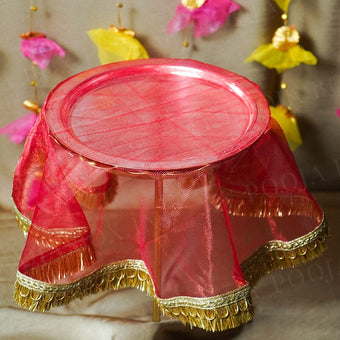
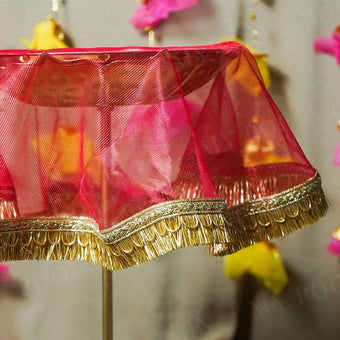
When it comes to Karwa Chauth, there are numerous rituals linked with it, one of which is viewing the moon through a sieve (Chalni). Many of us have wondered why women use a sieve to glimpse the moon on Karwa Chauth. Here are a few considerations that will help you in appreciating this lovely tradition.
Understanding the Karwa Chauth Festival
Before we delve into the specifics of the moon through the sieve ritual, it's important to understand the cultural and spiritual significance of Karwa Chauth.
-
What is Karwa Chauth?
-
Karwa means a clay pot filled with water.
-
Chauth refers to the fourth day after the full moon in the month of Kartik (Hindu lunar calendar).
-
The festival is celebrated by married women, who observe a strict fast from sunrise to moonrise.
-
Why is Karwa Chauth celebrated?
-
Women fast for the health, prosperity, and long life of their husbands.
-
It is a festival of love, devotion, and the unbreakable bond between husband and wife.
Now, let’s explore the specific ritual of viewing the moon through a sieve.
The Significance of Viewing the Moon Through a Sieve on Karwa Chauth
1. The Legend of Seven Brothers and One Sister
According to ancient folklore, the use of a sieve on Karwa Chauth is tied to a mythical story involving a moneylender, his seven sons, and his daughter.
-
The Fast and its Consequences:
-
A woman, fasting for the well-being of her husband, was feeling weak from the prolonged fast.
-
Her seven brothers, unable to see her suffering, devised a plan where they placed a burning candle behind a sieve to create an illusion of the moon.
-
The woman saw the moon and ended her fast, but unfortunately, her husband fell ill soon after.
-
Moral of the Story:
-
It’s believed that breaking the fast without seeing the real moon is a bad omen.
-
Since then, the ritual of using a sieve to view the moon became a part of Karwa Chauth celebrations. It symbolizes true devotion and the power of the moon’s blessings.
-
Takeaway: The sieve acts as a symbolic gateway to the moon's blessings, ensuring a husband’s long life, good health, and prosperity.
2. Other Beliefs Behind the Sieve Ritual
In addition to the popular mythological story, there are other reasons why women use a sieve for moon viewing on Karwa Chauth.
-
The Role of the 'Ghoonghat' (Facial Veil):
-
In northern India, women traditionally wear a ghoonghat (facial veil) during religious rituals to show respect.
-
The sieve is used as a substitute for the ghoonghat while viewing the moon, maintaining the sense of reverence and devotion during the ceremony.
-
Symbolism of the Moon:
-
The moon is often seen as a symbol of peace, serenity, and love.
-
Viewing the moon through the sieve filters out negativity and allows the positive moonlight to bless the woman and her family.
-
It is believed that this filtered moonlight brings happiness, health, and well-being.
3. The Moon and Its Divine Significance
-
The Moon as a Manifestation of Lord Brahma:
-
In Hindu beliefs, the moon is considered a manifestation of Lord Brahma, the creator.
-
It is associated with qualities like coolness, beauty, and long life.
-
By observing the moon through a sieve, women pray for the manifestation of these divine qualities in their husbands' lives.
-
Why Women Look at the Moon First and Then Their Husbands:
-
The moon symbolizes peace, love, and the promise of a long, prosperous life.
-
By viewing the moon first, women invoke the blessings of the moon for their husbands, wishing them health and happiness.

The story of seven brothers and one sister:
According to legend, a moneylender with seven sons and one daughter lived in a village. The daughter had kept the Karwa Chauth fast in order to ensure her husband's health and long life. She began to feel uneasy as a result of the prolonged and exhausting fast. Seeing their only sister in such a state, the brothers pleaded with her to eat something, but she refused, saying she would only eat after seeing and worshipping the moon.
Unable to see their sister's hunger and thirst, the brothers devised a plan. They climbed a faraway tree and set a burning candle on one of its branches. They then put a sieve in front of it and went to call their sister, claiming that the moon could be seen through the tree branches. As a result, the woman worshipped the moon and ended her fast. Soon after this, her husband became unwell and died. Since then, it was considered a bad omen to break the fast without seeing the actual moon.
It is believed that following that incident, women began to use the sieve to see the true moon and then worship it for the long life, good health, safety, and happiness of their husbands. One of the reasons why women celebrate the Karwa Chauth holiday is because of this mythological story.

Other beliefs:
In addition to the above mentioned tale, there are two other reasons why women use a sieve to see the moon on Karwa Chauth. The first of the two reasons is that married women in Northern India wear a 'ghoonghat' (facial veil) to show respect to their family elders. As a result, when they see the moon, they use a sieve as a ghoonghat to pay reverence.
Secondly, the moon is seen as a sign of peace, love, and joy. Women use a sieve or Chalni to filter the rays coming from the moon. Happiness and positivity are thought to be present in the filtered rays.
The moon, according to Hindu beliefs, is a manifestation of Lord Brahma and is endowed with a long life. The moon is beautiful, cool, loveable, and long-lived. This is also one of the reasons why women look at the moon through a sieve first and then their husband’s face. They pray for the manifestation of all these qualities in their husbands and wish for their long and healthy lives.
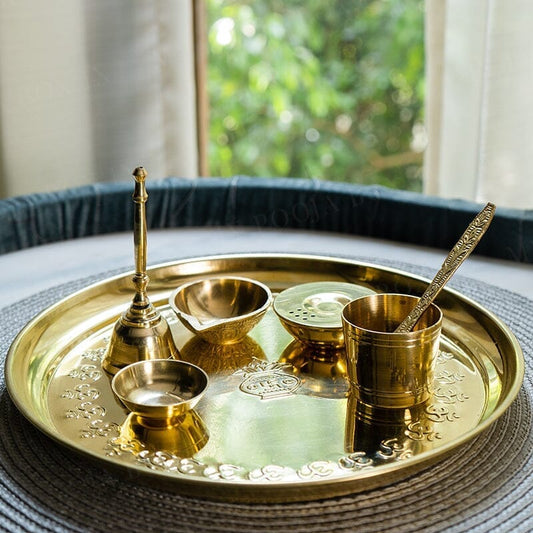
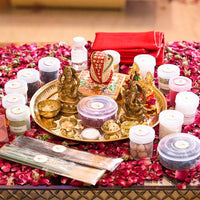
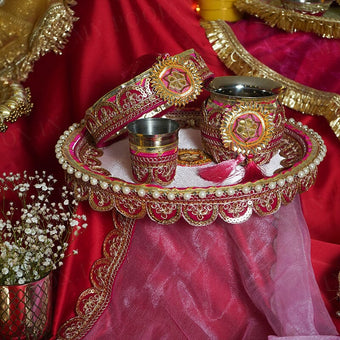
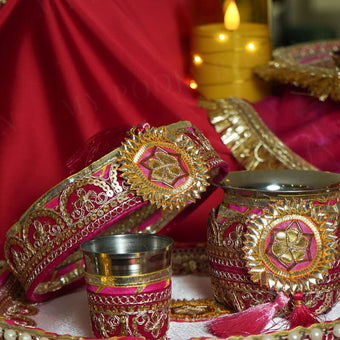
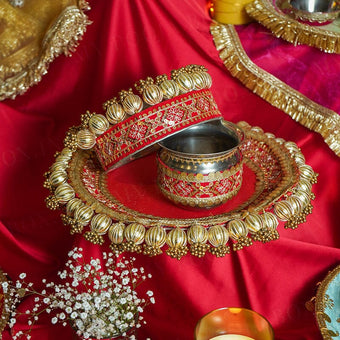
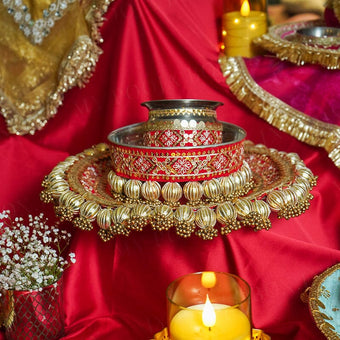
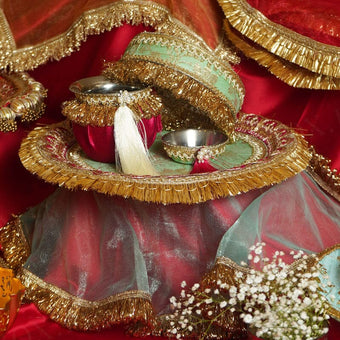
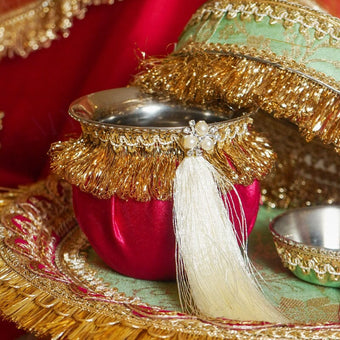
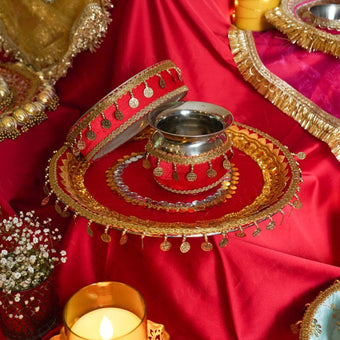
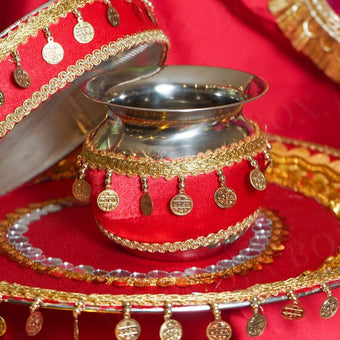
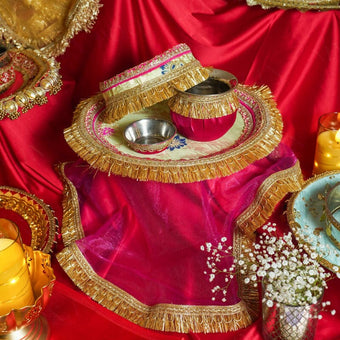
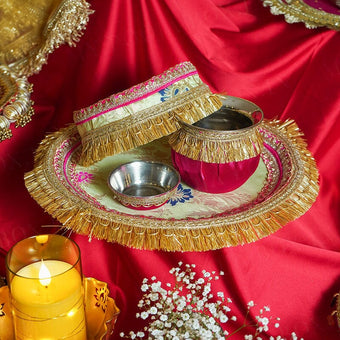
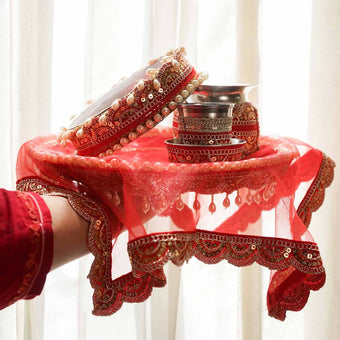
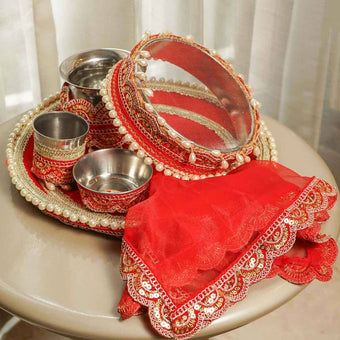
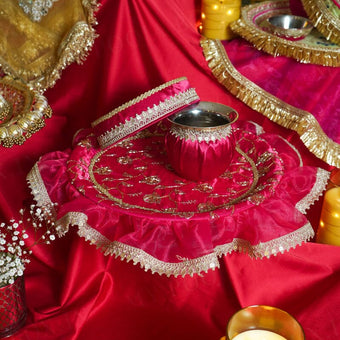
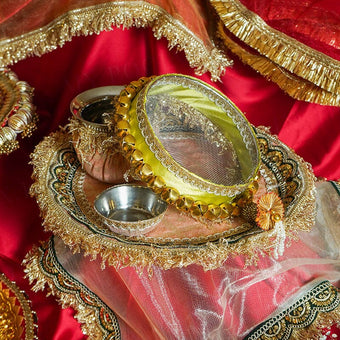
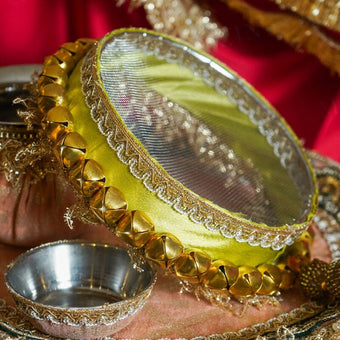
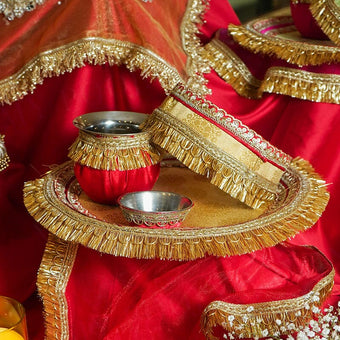
In the Hindu religion, every ritual, be it small or large, holds great significance. You can look for some unique Karwa Chauth gift ideas for your beloved wife to make this wonderful day even more unique and unforgettable for her. Karwa Chauth pooja thali set from MyPoojaBox is among the best-sellers.
We wish you a happy Karwa Chauth and happiness to you and your family!