























The birth of Lord Krishna is not merely an ancient historical event; it is a timeless reminder of hope, divine love, and the ultimate triumph of righteousness over tyranny. Celebrated across the world as Janmashtami, Krishna's arrival marks one of the most sacred moments in Hindu culture and scripture.
Below is the complete, captivating story of Shri Krishna’s birth, detailing why the divine descended to Earth, how a miraculous midnight escape changed destiny, and answers to common questions about His divine arrival.
A World in Darkness: The Call for Divine Help

During the Dwapara Yuga, the Earth was burdened by tyranny, injustice, and evil rulers. Morality (dharma) was rapidly fading, and innocent souls suffered under the heavy weight of oppression. Unable to bear the distress, Mother Earth cried out for divine intervention.
In response to the prayers of the righteous, the Supreme Power promised to manifest in human form to eradicate evil and restore peace to the universe.
The Prophecy and King Kansa's Fear

In the city of Mathura, the cruel and tyrant king Kansa ruled with an iron fist. On the joyous occasion of his sister Devaki's marriage to Vasudeva, a heavenly voice (Akashvani) echoed through the sky with a chilling prophecy:
"The tyrant king Kansa was warned by the divine prophecy that his sister Devaki's 8th child would be the cause of his ultimate destruction."
Terrified for his life, Kansa immediately imprisoned Devaki and Vasudeva. To eliminate any threat, he systematically killed their first seven newborn children inside the cold cells of the Mathura prison.
The Divine Birth in the Prison of Mathura
Despite Kansa's ruthless attempts to alter destiny, divine will could not be stopped. On a dark, stormy midnight on the eighth day (Ashtami) of the Krishna Paksha in the month of Bhadrapada, Lord Krishna was born.
-
Time of Birth: Midnight, under a heavy, stormy sky filled with torrential rain and thunder.
-
Place of Birth: Inside the heavily guarded prison cell of Mathura.
-
Spiritual Significance: Born in the depths of darkness, Baby Krishna emerged as a beacon of hope, divine love, and cosmic justice.
A Miraculous Escape to Gokul

To protect the divine infant from King Kansa’s wrath, a series of extraordinary miracles unfolded simultaneously:
-
The Guards Fell Asleep: Heavy sleep overcame all of Kansa's prison guards.
-
The Chains and Doors Unlocked: The heavy iron chains fell away, and the locked prison doors automatically swung open.
-
Crossing the Yamuna: Vasudeva placed baby Krishna in a wicker basket and carried him on his head. As Vasudeva entered the raging Yamuna River, the waters parted to make way, while Sheshnag (the divine serpent) expanded his multi-headed hood to shield the baby from the pouring rain.
Vasudeva safely reached Gokul, swapped Krishna with the newborn daughter of Yashoda and Nanda, and returned to the prison before dawn.
Why We Celebrate Janmashtami Today

Janmashtami is far more than a cultural festival; it is a celebration of spiritual liberation and cosmic harmony. We celebrate Janmashtami to honor:
-
The Victory of Good Over Evil: A reminder that tyranny is temporary and righteousness always prevails.
-
The Power of Divine Love: Welcoming Lord Krishna into our hearts brings joy, light, and protection.
-
The Arrival of a Savior: Commemorating the birth of the divine incarnation who delivered the eternal wisdom of the Bhagavad Gita.
Why Was Lord Krishna Born in a Prison?
Lord Krishna was born in a prison cell to demonstrate that divine light can manifest even in the darkest and most restrictive places. Symbolically, the prison represents the material bondage of human life, ego, and ignorance. Krishna's birth within those walls signifies that when the divine enters our lives, all spiritual bondages break, and liberation begins.
Who Were Krishna's Biological Parents vs. Foster Parents?
Understanding Krishna's upbringing involves two loving sets of parents:
-
Biological Parents: Devaki and Vasudeva, who bore the hardship of imprisonment in Mathura and protected the child through sacrifice.
-
Foster Parents: Yashoda and Nanda Baba, the village heads of Gokul, who raised Krishna with deep affection, giving rise to the endearing stories of Bal Krishna and His playful antics (leelas).
Why Is Krishna's Birth Celebrated at Midnigh
According to sacred texts, Lord Krishna was born precisely at midnight during the Rohini Nakshatra on the Ashtami tithi (eighth day of the dark fortnight). Devotees maintain fasts throughout the day and stay awake until midnight. At 12:00 AM, special prayers, Abhishekam (sacred bath), and Aarti are offered to celebrate the exact moment of His divine manifestation.
How Do People Celebrate Janmashtami at Home?
Devotees transform their home mandirs into mini-Gokuls to welcome Lord Krishna:
-
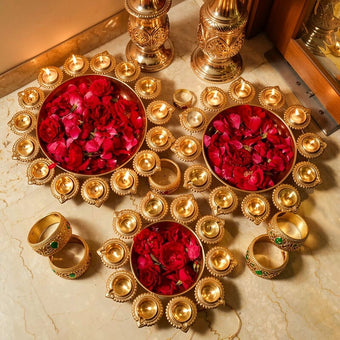
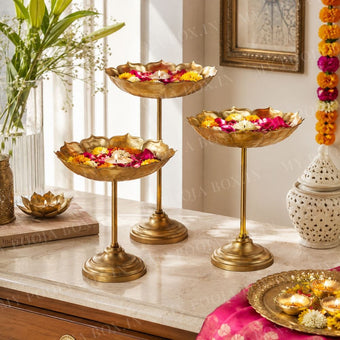
Cleaning and Decorating the Mandir: Adorning the altar with fresh flowers, marigold garlands, and rangoli patterns.
-
Dressing Laddu Gopal: Bathing the brass Laddu Gopal idol in Panchamrit and dressing Him in new, colorful silk clothes (Shringar).
-
Swinging the Jhula: Placing the infant Krishna on a decorated carved wooden or brass swing (Jhula) and gently swinging Him while singing bhajans.
-
Offering Bhog: Serving fresh white butter (Makhan), sugar candy (Mishri), panjiri, and milk-based sweets before breaking the fast.
Celebrate the Divine Arrival with My Pooja Box
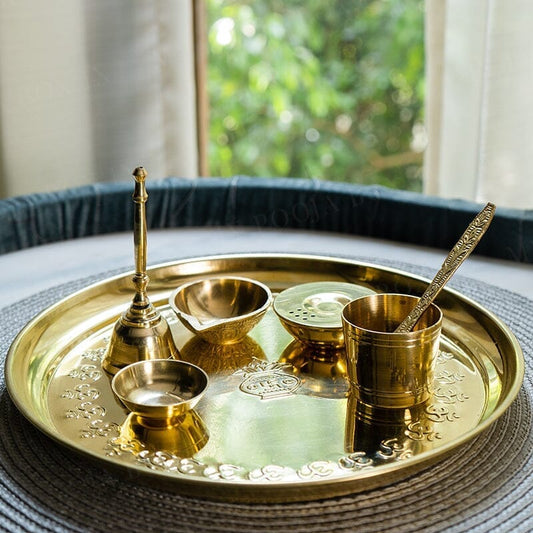
Bring the spirit and joy of Janmashtami into your sacred home space. At My Pooja Box, we offer handcrafted brass Krishna idols, decorative jhulas, traditional pooja thalis, and complete festival kits to help you recreate the divine atmosphere of Gokul right in your mandir.
Explore our exclusive Janmashtami collections today and welcome Lord Krishna with pure devotion.