What Each Piece Is and Where It Goes
This collection holds four different things, and they work together rather than in place of one another. A complete pooja setup usually uses all four.
Piece
Where it goes
What it does
Chowki
On the floor or...
What Each Piece Is and Where It Goes
This collection holds four different things, and they work together rather than in pla...
What Each Piece Is and Where It Goes
This collection holds four different things, and they work together rather than in place of one another. A complete pooja setup usually uses all four.
|
Piece
|
Where it goes
|
What it does
|
|
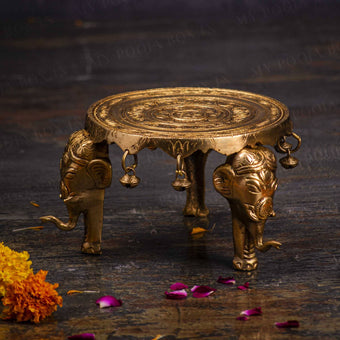
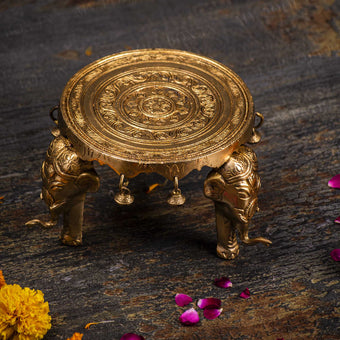
Chowki
|
On the floor or on a shelf, under everything else
|
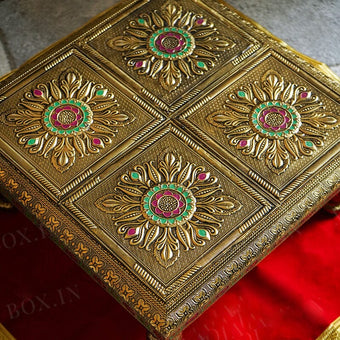
A raised platform for the idol. Traditionally the deity is never placed directly on the floor, and the chowki is what lifts it
|
|
Aasan
|
On the chowki, under the idol, or on the floor for you to sit on
|
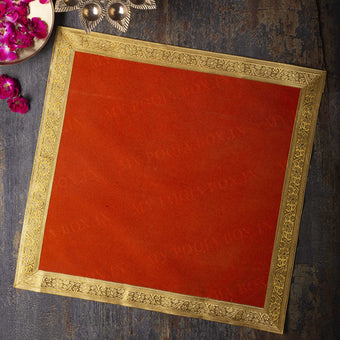
A cloth mat. Used both as the deity's seat and as the worshipper's seat, in different sizes
|
|
Backdrop
|
On the wall behind the idol
|
Frames the idol and sets the scale of the whole setup
|
|
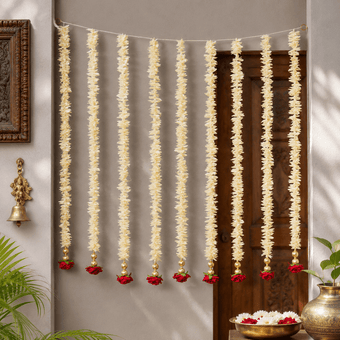
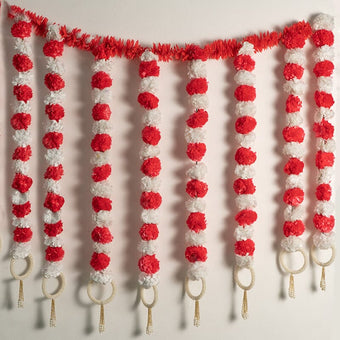
Toran or bandhanwar
|
Across the top of the main door
|
Marks the entrance as welcoming. Hung before the idol is brought in
|
Build the setup from the bottom up: chowki first, then the aasan on it, then the idol, then the backdrop behind, and finally the toran at the door.
Choosing an Aasan
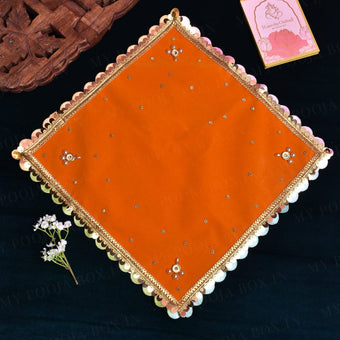
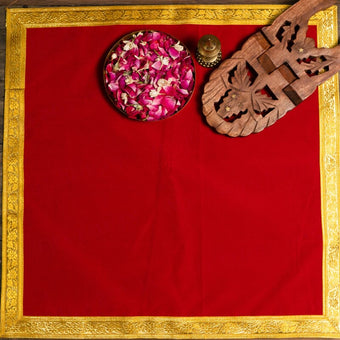
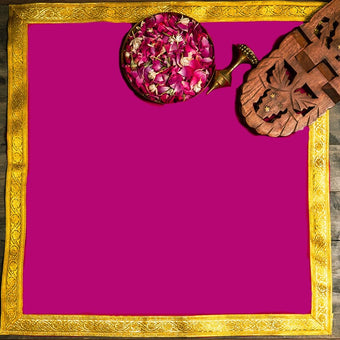
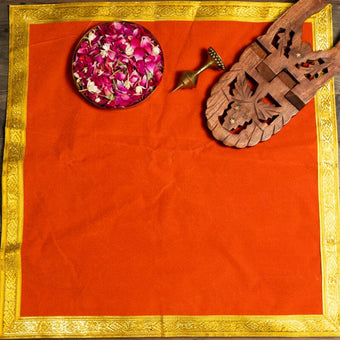
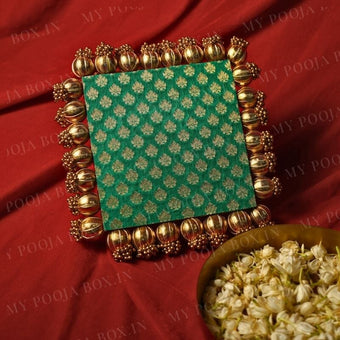
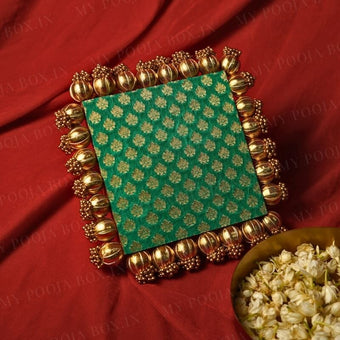
The word aasan simply means seat, and that is why the same word covers two quite different things. A small aasan is the seat for the deity, placed under the idol on the chowki. A large aasan is the seat for you, spread on the floor to sit on while you perform the puja. Buying the wrong one is the most common mistake here, so check the size before you order.
|
Size
|
Used as
|
Suits
|
|
20 x 25 cm
|
Deity's seat
|
A small idol on a pooja shelf, or under a thali or kalash
|
|
26 to 30 cm
|
Deity's seat
|
The most commonly chosen size for a home mandir idol
|
|
40 x 40 cm
|
Deity's seat or a small chowki cover
|
A larger idol, or covering the top of a chowki with the idol on it
|
|
45 x 45 cm
|
Either
|
A large idol, or a compact sitting mat for one person
|
|
60 x 60 cm
|
Worshipper's seat
|
Sitting on the floor for daily puja, japa or meditation
|
Fabric
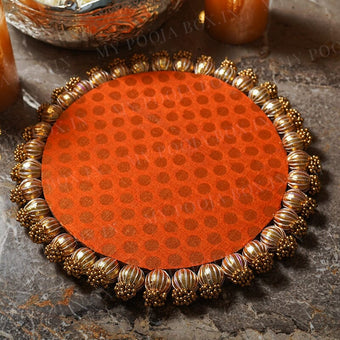
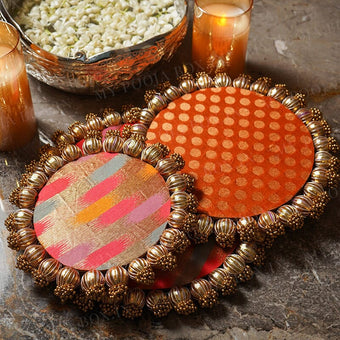
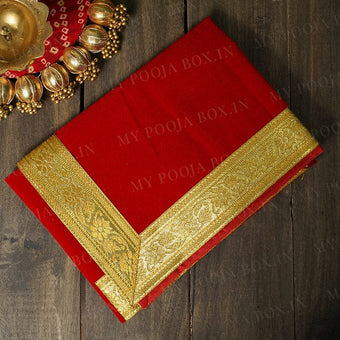
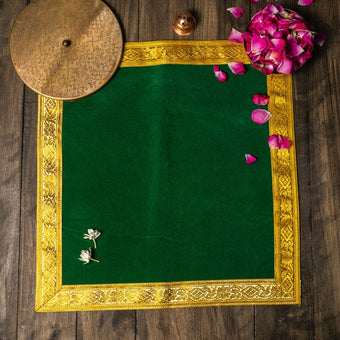
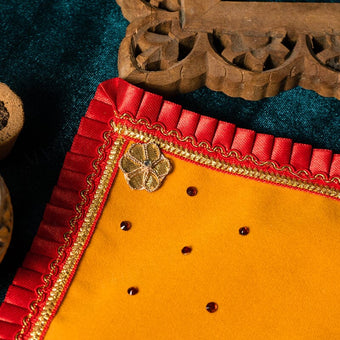
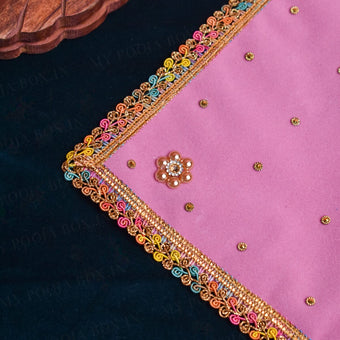
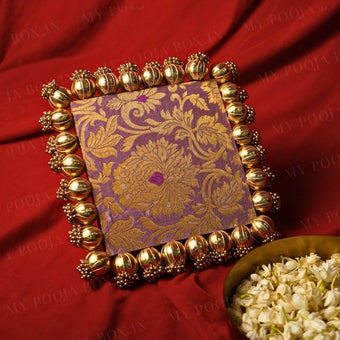
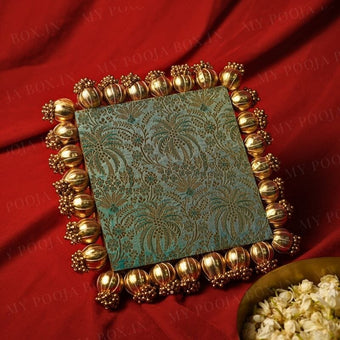
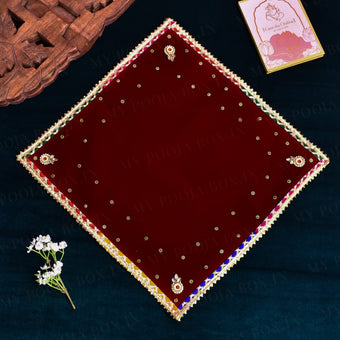
Velvet is soft, sits flat and comes in the deep traditional colours. Brocade, often woven two sided so you can turn it over for a different look, carries more pattern and a formal finish. Bead work and mirror work add detail at the border and suit a festival setup more than daily use, since heavy borders take longer to clean.
Colour
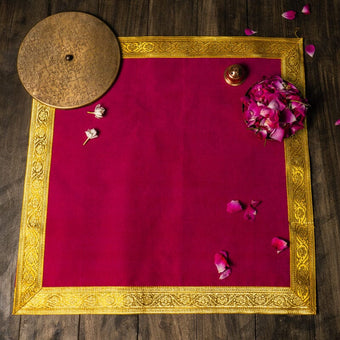
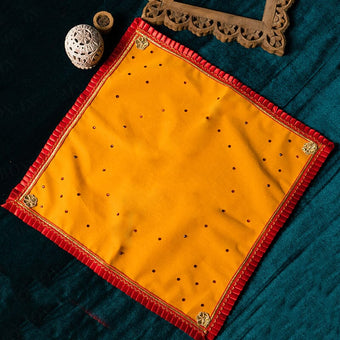
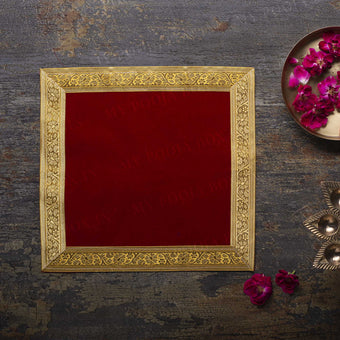
Red and maroon are the most traditional for both the deity's seat and the worshipper's, followed by orange, yellow and pink. For a sitting aasan used for japa or meditation, plain colours are usually preferred over heavy pattern, simply because there is less to distract the eye.
Choosing a Chowki
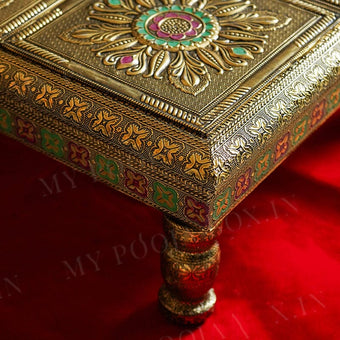
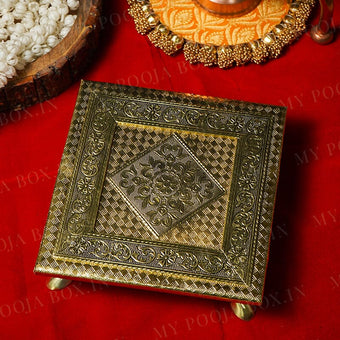
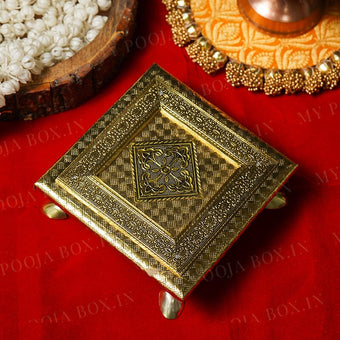
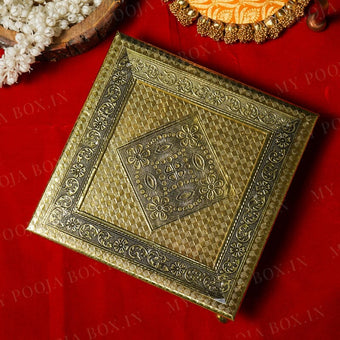
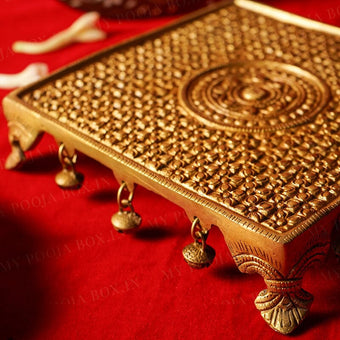
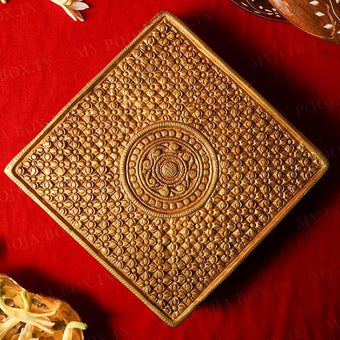
A chowki is the raised platform the idol sits on. The reason for it is straightforward: in Indian household practice a deity is not placed directly on the floor, and the chowki is what gives the idol its own seat. It also lifts the idol clear of the aarti thali, the diyas and the offerings arranged in front.
Materials
|
Material
|
Character
|
Best for
|
|
Brass
|
Heavy, traditional, develops a patina over time, often with antique or engraved work
|
A permanent mandir setup and the centrepiece idol. The most substantial choice
|
|
Wood
|
Warm and light, suits traditional interiors, often carved with floral motifs
|
A home mandir where the chowki stays in place
|
|
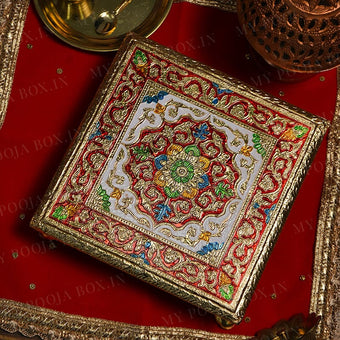
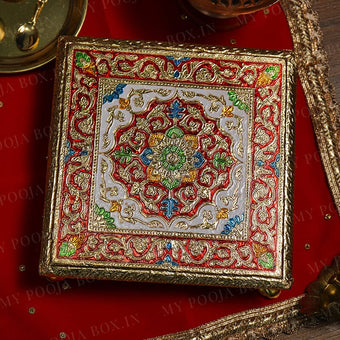
Meenakari
|
Metal with coloured enamel work, bright and decorative
|
Festival setups and smaller idols, where colour is wanted
|
|
Plain metal
|
Simple and practical, easy to move and clean
|
Everyday use, and for households that rearrange the mandir often
|
Size and Height
Chowkis are usually described by the top surface, commonly around 15, 20 or 25 cm square. Choose one where the idol sits comfortably within the surface with a little clear border around the base, rather than overhanging the edge. If you plan to place an aasan on the chowki as well, allow for that in the size.
On height, higher is not automatically better. The idol should sit at or slightly above the eye level of someone seated on the floor in front of it, which for most homes means a low chowki on a shelf, or a taller one if the setup is at floor level.
A Practical Point on Brass
A brass chowki is heavy, which is exactly what you want under a substantial idol, but it also means the shelf or table underneath needs to take the combined weight of the chowki and the idol. Check the surface is solid before placing one, and keep the chowki on a flat base so it does not rock.
Choosing and Hanging a Backdrop
Backdrops come in several distinct styles and the names are not always familiar, so here is what each one means.
|
Style
|
What it is
|
Suits
|
|
Phool bangla
|
A flower house, an arch or canopy of blooms framing the idol on three sides
|
A centrepiece setup where the idol sits inside the frame
|
|
Phool darbaar
|
A flower court, a fuller floral panel forming a rich backdrop behind the deity
|
A larger mandap or floor setup
|
|
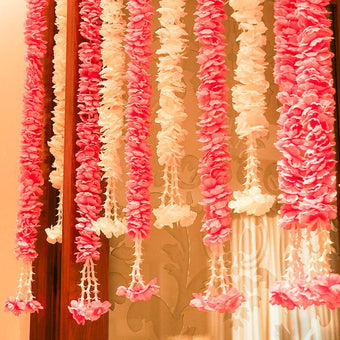
Artificial flower panel
|
A flat panel of jasmine, marigold, lotus buds, roses or daisies
|
Most home setups. Reusable year after year
|
|
Fabric hanging
|
A cloth backdrop, commonly around 3.5 ft by 3 ft, often with bead danglers
|
A full setup behind a floor level or console idol
|
|
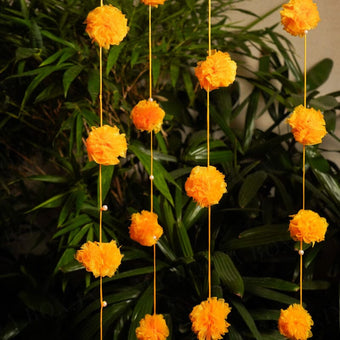
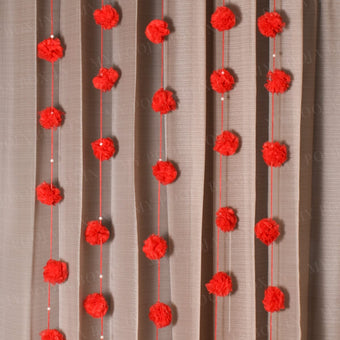
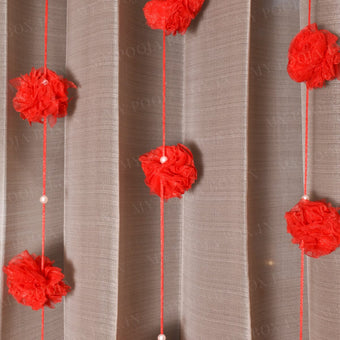
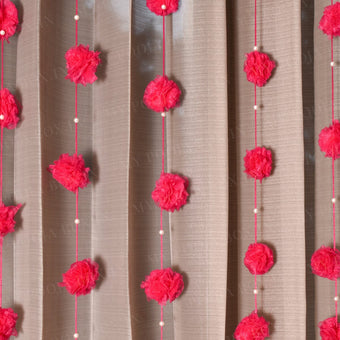
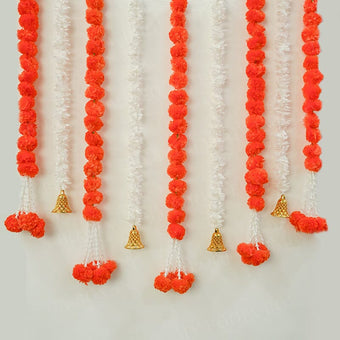
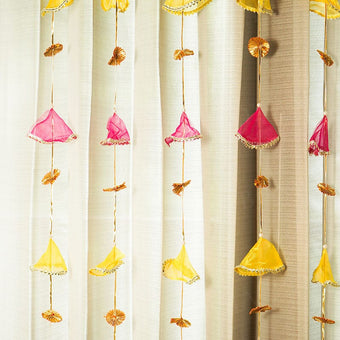
Pompom or tassel curtain
|
A set of hanging strands, usually five, hung side by side
|
A lighter, more contemporary look, and easy to adjust for width
|
|
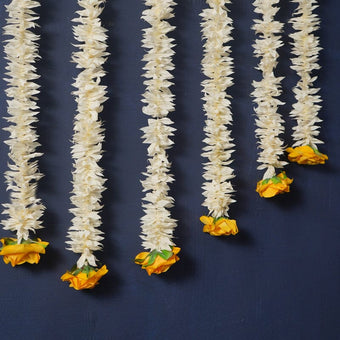
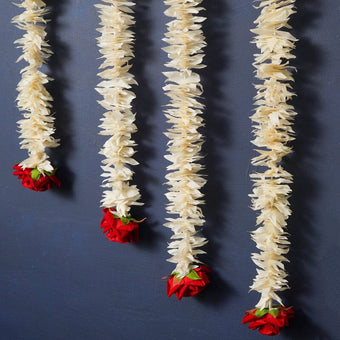
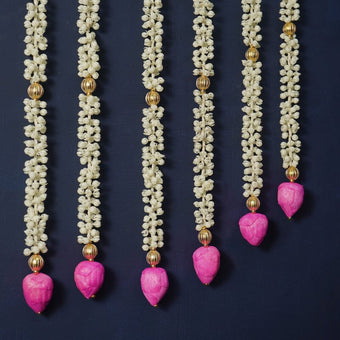
Flower strings
|
Individual strands hung vertically or draped
|
Filling gaps, layering over a plain backdrop, or a very compact setup
|
Getting the Size Right
Keep the backdrop wider than the idol on both sides so the idol reads as the centre of the setup rather than being crowded. Hang it high enough that the lower edge sits behind the idol rather than resting on it, and leave clear space in front for the thali, the diya and the offerings.
Hanging It Without Damaging the Wall
- Measure the wall space before ordering, including the height available above the chowki or console.
- For a light fabric or pompom backdrop, removable adhesive hooks are usually enough. Check the weight rating on the pack, and press the hook firmly for the time the instructions state before hanging anything on it.
- For a heavier floral panel or a phool darbaar, use a curtain rod, a tension rod between two walls, or proper wall hooks. Adhesive strips are the usual reason a backdrop comes down mid festival.
- If you would rather not touch the wall at all, hang the backdrop from a freestanding clothes rail or a curtain rod resting on two stands placed behind the setup.
- Keep the lower edge and any hanging strands clear of diyas and oil lamps. Fabric and artificial flowers catch easily.
Care and Storage
Velvet and Brocade Aasans
Spot clean rather than washing where you can, since both fabrics lose their finish in a machine. For velvet, dab a barely damp cloth on the mark and never wring or iron the surface directly, because pressure crushes the pile permanently. For brocade, be careful around the zari, which tarnishes with water and detergent. Two sided brocade mats can simply be turned over while one side is being cleaned.
Bead and Mirror Work
Do not soak these, since water loosens the adhesive holding beads and mirrors in place. Clean around the border with a dry brush and only spot clean the fabric between the beadwork. Store them flat rather than folded through the beaded section.
Artificial Flower Backdrops
These are the pieces most worth looking after, because they are reusable for years if stored properly. Dust them with a dry brush or a hairdryer on cool setting. Store flat or loosely rolled, never compressed under heavier items, since crushed petals do not spring back. If a panel arrives flattened from packing, hanging it up for a day usually lets the flowers recover their shape.
Brass Chowkis
Wipe oil and ghee off promptly after puja, since brass marks where oil sits. Clean occasionally with lemon and a little salt or with tamarind paste, then rinse and dry completely, because trapped moisture is what causes patchy dark spots. Many households leave the natural darkening alone and clean only before major festivals.
Storing Between Festivals
Keep the whole setup together in one labelled box. Fabric in a cloth bag rather than plastic so it can breathe, flower panels flat on top rather than underneath, and brass wrapped in a soft cloth. The usual reason households rebuy the same pieces each year is not damage, it is not being able to find last year's set.
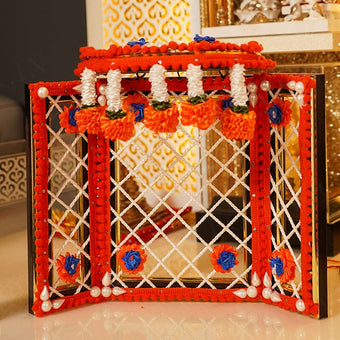
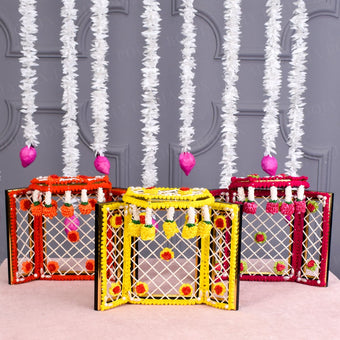
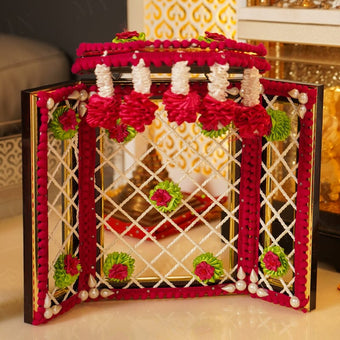
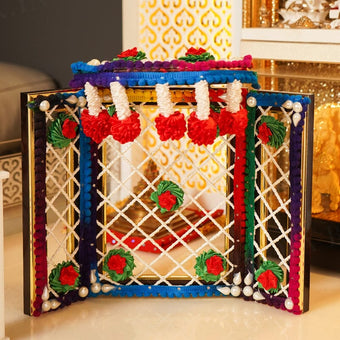
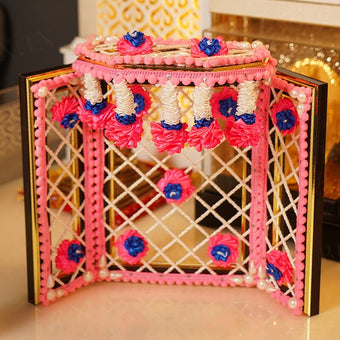
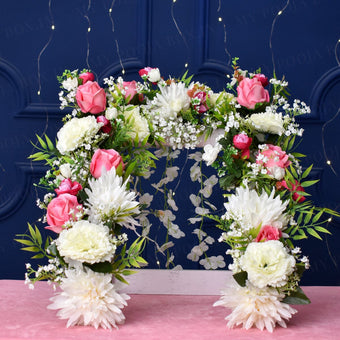
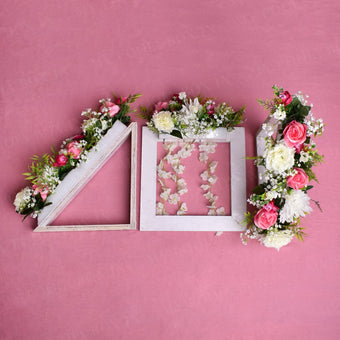
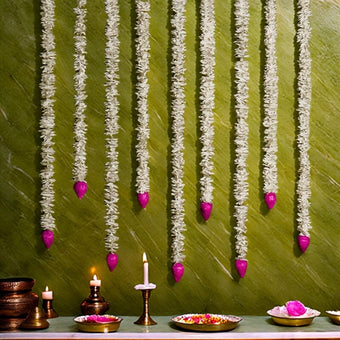
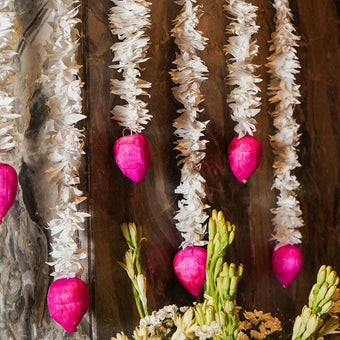
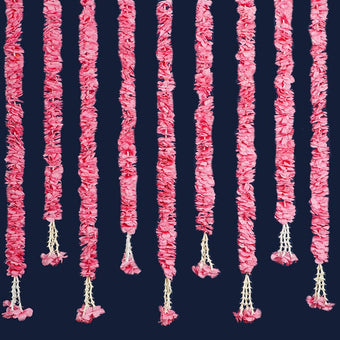
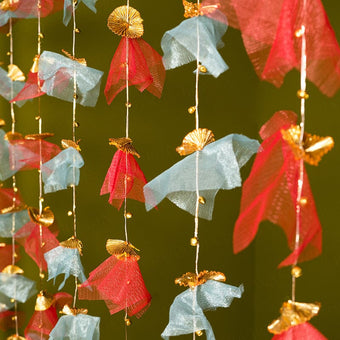
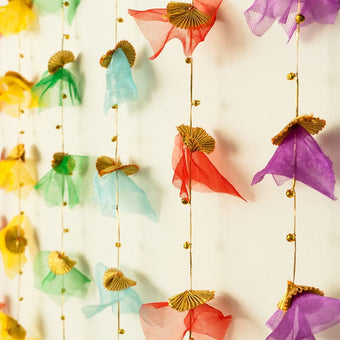
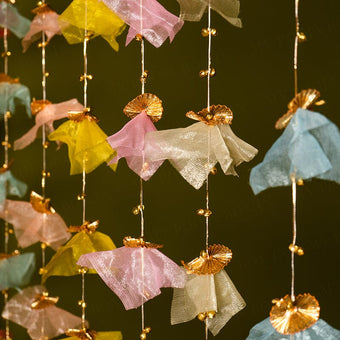
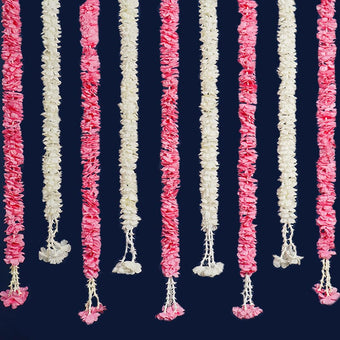
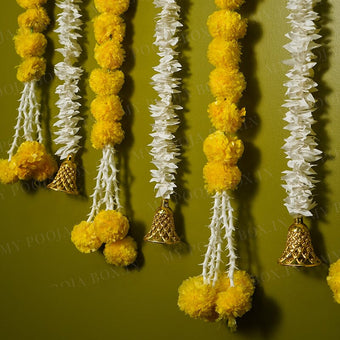
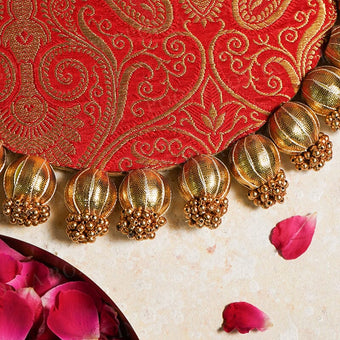
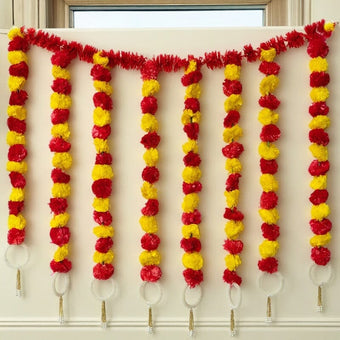
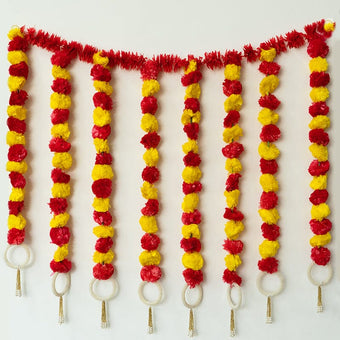
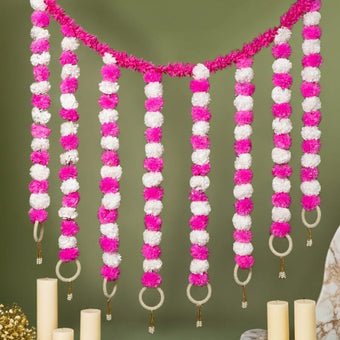
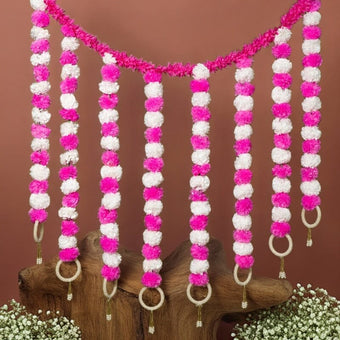
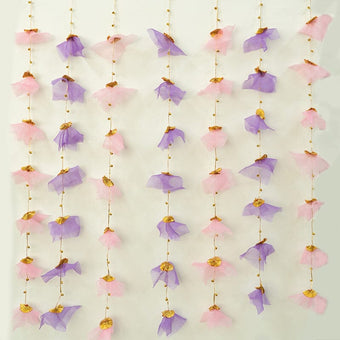
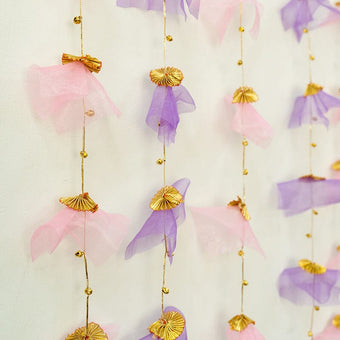
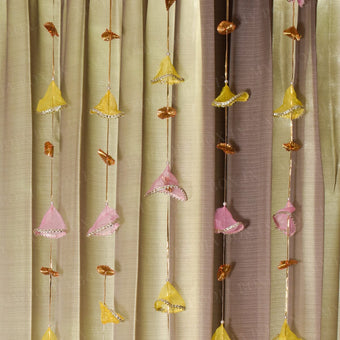
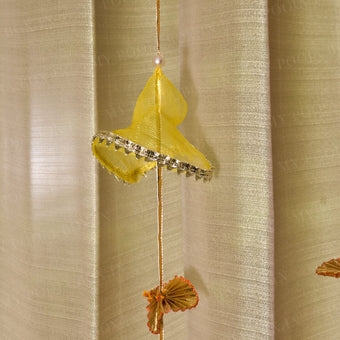
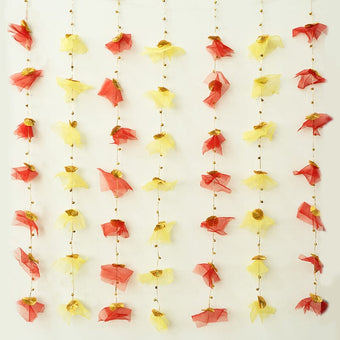
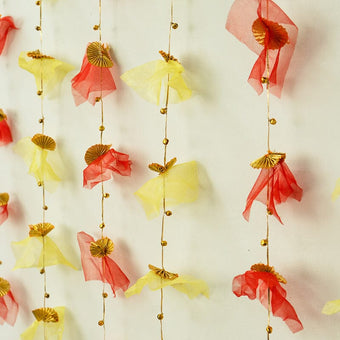
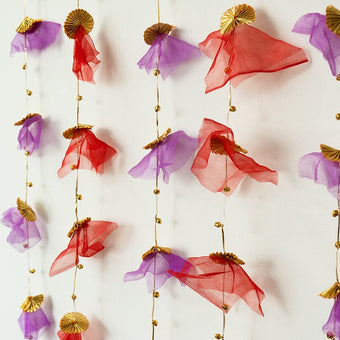
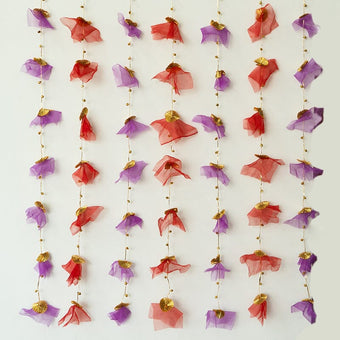
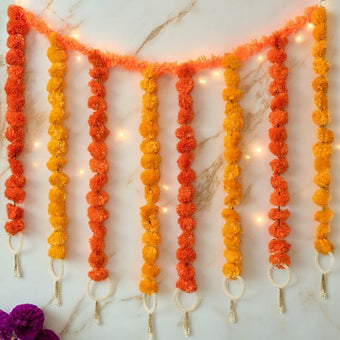
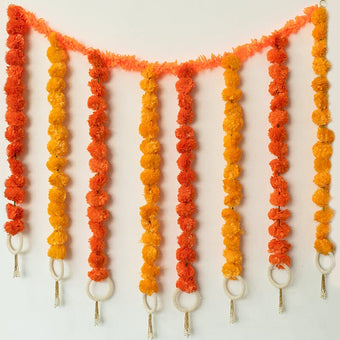
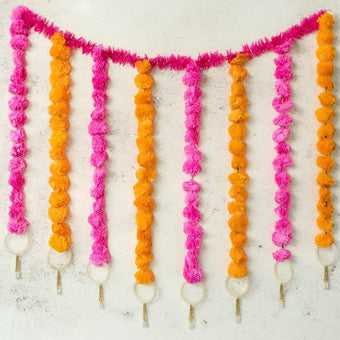
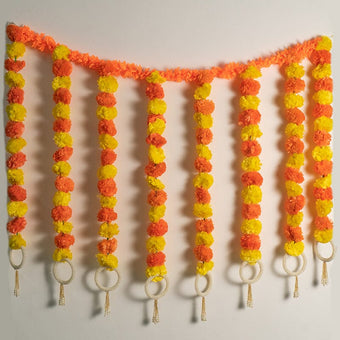
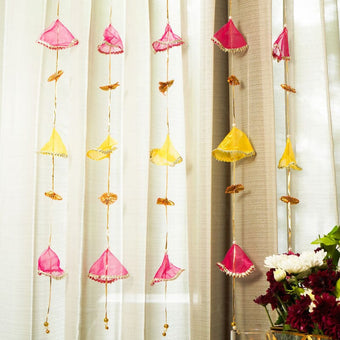
Any occasion is incomplete without proper decoration, and sometimes it can be a troublesome task. My Pooja Box Floral Pink and Yellow Backdrop Decor piece ended all your worries. Created in vibrant colors and magnificent beads danglers attached to the ends, the collection of the backdrop as decor pieces will ensure you a pleasant sight.
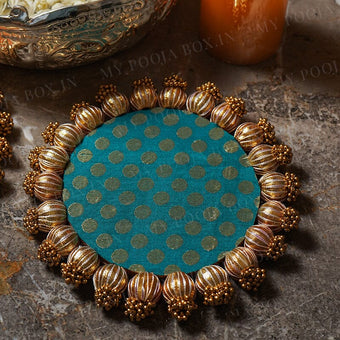
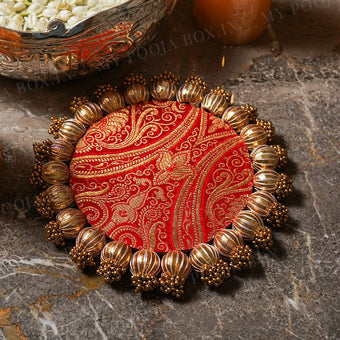
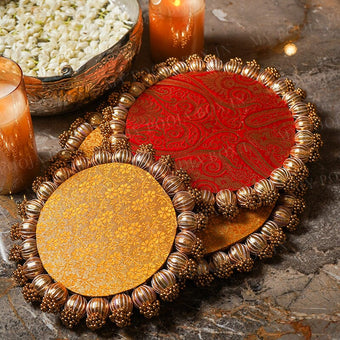
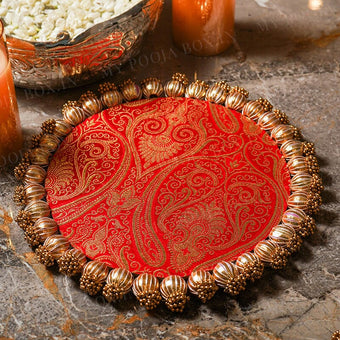
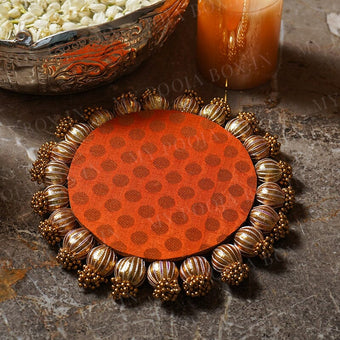
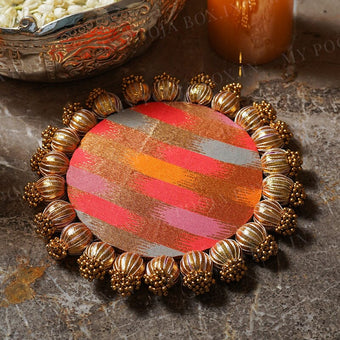
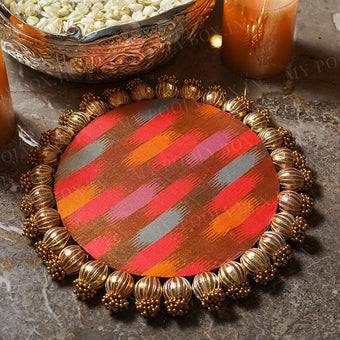
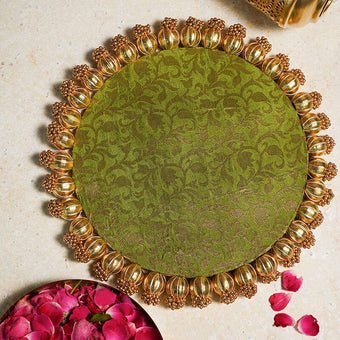
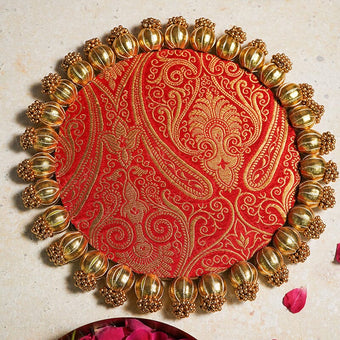
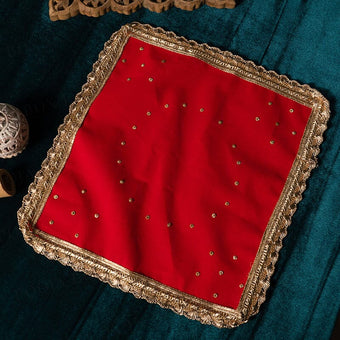
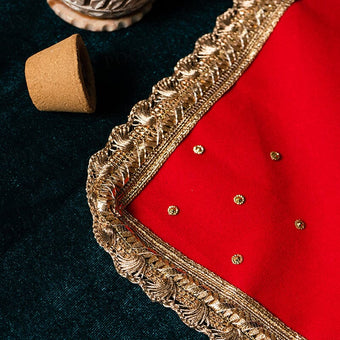
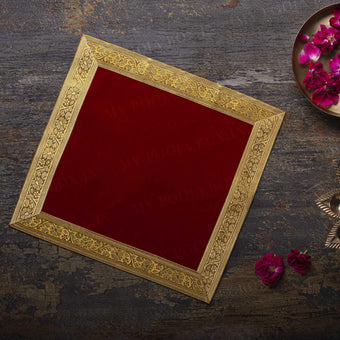
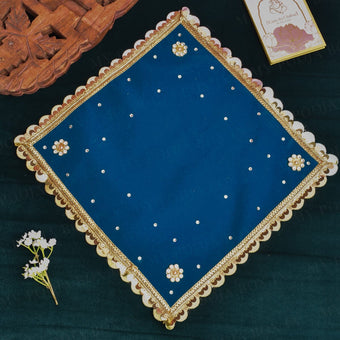
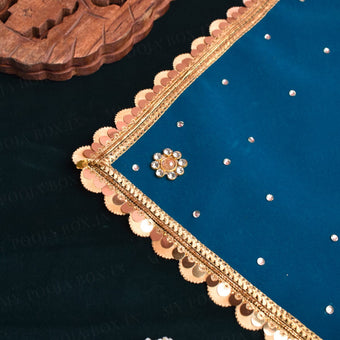
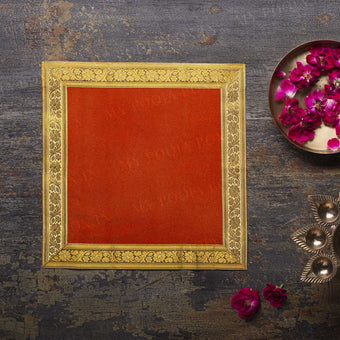
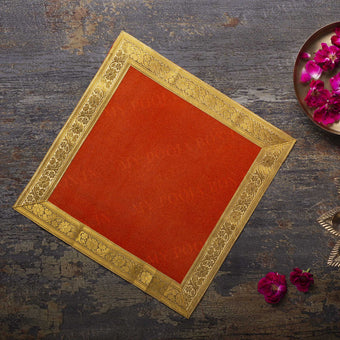
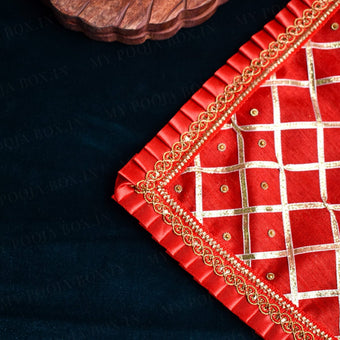
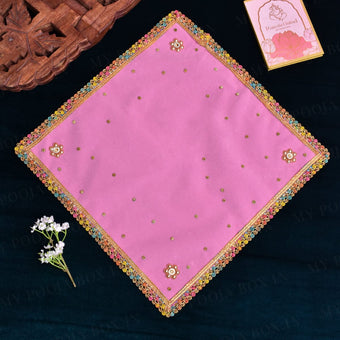
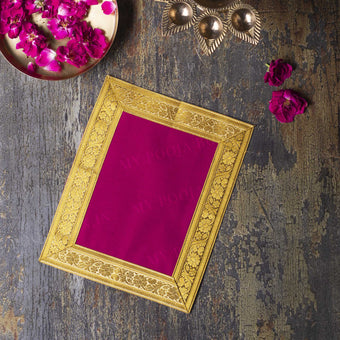
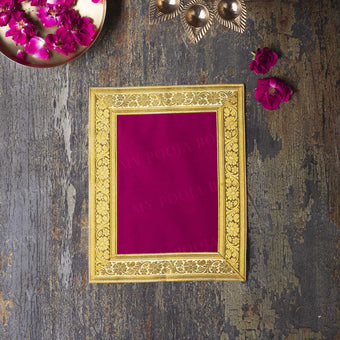
These pooja asanas can be used in various settings, such as altars or puja mandirs. They are also used to decorate Mata ki chowkis, wooden chowkis, puja tables, deity thrones, platforms, and other purposes. It is also used in the backdrop of deity idols such as Lord Krishna, Goddess Durga, etc., to enhance the spiritual ambiance. These are made from velvet and have broad strips with mirrors and laces decorated on the outline.
Made from the best quality velvet material that ensures 100% comfort with its softness, these Aasans with the rich thread work showcase the beautifully seated Lord Ganesha. Perfect to use for everyday pooja, Laxmi Pooja, Ganesh Chaturthi, or other religious celebrations, the collection of captivating Aasan for Ganesha Murti is available at an affordable price. It is a beautiful item you need to grab now.
Commonly Asked Questions About Backdrops, Aasans and Chowkis
Q1. What is the difference between an aasan and a chowki?
Answer: A chowki is the raised platform, usually brass, wood or metal, that the idol sits on. An aasan is the cloth mat that goes on top of it, or that you sit on. In a full setup you use both: the chowki lifts the deity off the floor or the shelf, and the aasan gives it a seat. They are bought together as often as separately.
Q2. What size aasan do I need?
Answer: It depends on which kind you want. As the deity's seat, 20 x 25 cm suits a small shelf idol, 26 to 30 cm is the most commonly chosen size for a home mandir, and 40 x 40 cm suits a larger idol or covers the top of a chowki. As your own seat for sitting on the floor during puja, 45 x 45 cm is a compact option and 60 x 60 cm is the comfortable one. Check the measurement before ordering, because the same word covers both uses.
Q3. Can the same aasan be used for the idol and for sitting?
Answer: In practice most households keep them separate, and it is a distinction worth maintaining. The deity's seat stays in the mandir and is kept clean for that purpose alone, while the sitting aasan goes on the floor. Size settles it in any case: a 60 x 60 cm mat is too large under most home idols, and a 20 x 25 cm mat is too small to sit on.
Q4. Why is a chowki used under the idol?
Answer: In Indian household practice a deity is not placed directly on the floor, and the chowki is what gives the idol its own raised seat. It also lifts the idol clear of the aarti thali, the diyas and the offerings arranged in front, which keeps the setup tidy and reduces the chance of oil marking the idol's base.
Q5. Which chowki material should I choose?
Answer: Brass is the most substantial and the most traditional, and suits a permanent mandir and a centrepiece idol, though it is heavy. Wood is warm and lighter and suits a home mandir that stays in place. Meenakari, which is metal with coloured enamel work, is bright and decorative and suits festival setups and smaller idols. Plain metal is the practical everyday choice and the easiest to move and clean.
Q6. What is a phool bangla and how is it different from a phool darbaar?
Answer: A phool bangla is a flower house, an arch or canopy of blooms that frames the idol on three sides so the deity sits inside the frame. A phool darbaar is a flower court, a fuller floral panel that forms a rich backdrop behind the deity rather than enclosing it. A bangla suits a centrepiece setup, while a darbaar suits a larger mandap or floor setup.
Q7. What size backdrop do I need?
Answer: Keep the backdrop wider than the idol on both sides, so the idol stays the centre of the setup rather than being crowded by it. Hang it so the lower edge sits behind the idol rather than resting on it. For a small shelf idol, a compact floral panel or a set of hanging strands is enough. For a floor setup or a large console, a full fabric hanging of around 3.5 ft by 3 ft suits the scale.
Q8. How do I hang a pooja backdrop without damaging the wall?
Answer: For a light fabric or pompom backdrop, removable adhesive hooks are usually enough, but check the weight rating and press the hook firmly for the time stated before hanging anything. For heavier floral panels, use a curtain rod, a tension rod between two walls, or proper wall hooks, since adhesive strips are the usual reason a backdrop comes down mid festival. If you would rather not touch the wall, hang the backdrop from a freestanding clothes rail or a rod resting on two stands behind the setup.
Q9. Can artificial flower backdrops be reused next year?
Answer: Yes, and that is one of the main reasons to buy them rather than fresh flowers. Dust them with a dry brush or a hairdryer on a cool setting, then store them flat or loosely rolled and never compressed under heavier items, because crushed petals do not spring back. If a panel arrives flattened from packing, hanging it up for a day usually lets the flowers recover their shape.
Q10. How do I clean a velvet or brocade pooja aasan?
Answer: Spot clean rather than machine washing, since both fabrics lose their finish in a machine. For velvet, dab the mark with a barely damp cloth and never wring or iron the surface directly, because pressure crushes the pile permanently. For brocade, keep water and detergent away from the zari, which tarnishes. Do not soak any aasan with bead or mirror work, since water loosens the adhesive holding them in place.
 Healing Crystals
 Pooja Essentials
 Brass Home Decor
 Limited Edition
 Himalayan Salt Lamps
 Pooja Room Decor
 Evil Eye
 Urlis
Urlis
 God Idols