What a Patka Is and How to Choose One
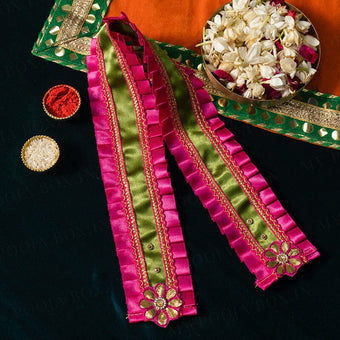
A patka is a decorative cloth draped across the shoulder of a deity's idol. It is the fabric version of the uttariya or angavastram, the upper cloth worn across the body in traditional Indian dress, and draping one on an idol i...
What a Patka Is and How to Choose One
A patka is a decorative cloth draped across the shoulder of a deity's idol. It is the f...
What a Patka Is and How to Choose One
A patka is a decorative cloth draped across the shoulder of a deity's idol. It is the fabric version of the uttariya or angavastram, the upper cloth worn across the body in traditional Indian dress, and draping one on an idol is a way of dressing and honouring the deity rather than simply decorating the mandir.
Patkas are used all year, not only at festivals. Many households change the patka weekly, at the start of a new month, or on the day associated with the deity they keep. They are used on Ganesha, Laxmi, Krishna, Durga, Shiva and Hanuman idols alike, and are equally at home on a small mandir idol as on a full Ganesh Chaturthi setup.
Three things decide which one to buy: the length, which should suit the height of your idol, the fabric, and the colour. Patkas in this collection come in 30 cm, 55 cm and 80 cm lengths. As a rough guide, 30 cm suits a small idol on a pooja shelf, 55 cm suits a mid sized idol, and 80 cm suits a large idol or a floor setup.
Satin, Velvet or Velvet Satin?
Fabric changes how a patka falls, how it catches light and how much upkeep it needs. Here is how the three compare.
|
Fabric
|
How it looks
|
Best for
|
Upkeep
|
|
Satin
|
Smooth with a bright sheen, catches light from across the room, drapes lightly and moves easily
|
Everyday mandir use, bright festive colours, smaller idols where a heavy fabric would overwhelm
|
Easiest. Hand wash cold, dries quickly, iron on low through a cloth
|
|
Velvet
|
Deep, matte and rich, absorbs light rather than reflecting it, falls with weight and holds its shape
|
Larger idols, formal or regal looks, deep colours such as maroon and royal blue
|
Most care needed. Never wring or iron directly, steam from the reverse and brush the pile
|
|
Velvet satin
|
A middle ground, with velvet's body and some of satin's sheen
|
A richer look than plain satin without velvet's bulk, and larger sizes where drape matters
|
Between the two. Treat it like velvet if in doubt
|
Embellishments
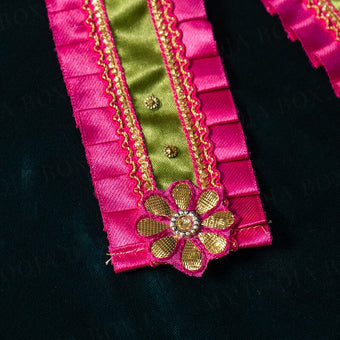
Beyond the base fabric, patkas differ in finish. Zari and golden borders add a traditional festive edge. Tassel ends, including pearl tassels, add movement and weight at the hem so the patka hangs straight. Embroidered and stone set patkas carry the most detail and suit a centrepiece idol. Plain satin patkas are the most versatile and the easiest to rotate through a year.
One practical point. Tassels and stonework add weight at the ends, which helps the patka sit properly on a larger idol but can drag on a very small one. For an idol under about six inches, a plain or lightly bordered patka usually sits better than a heavily embellished one.
Choosing a Colour
Colour is the main choice on a patka, and Indian tradition gives it more meaning than aesthetics alone.
By Deity
|
Deity
|
Traditional colours
|
Note
|
|
Ganesha
|
Red, saffron, orange, yellow
|
Red is the colour most associated with Ganesha, who is offered red flowers and sindoor. Yellow and saffron are equally traditional
|
|
Laxmi
|
Red, pink, gold
|
Red and gold for Diwali and Friday puja. Pink is a common contemporary choice
|
|
Krishna
|
Yellow, and blue or peacock tones
|
Krishna is called Pitambar, the one in yellow cloth, so yellow is the classic choice
|
|
Durga
|
Red, and deep pink or maroon
|
Red is the standard through Navratri
|
|
Shiva
|
White, saffron, rudraksha brown tones
|
White and saffron over bright or ornate fabrics
|
|
Hanuman
|
Red, orange, saffron
|
Sindoor red is the strongest association
|
|
Saraswati
|
White and pale yellow
|
Kept simple, in keeping with the deity
|
By Day of the Week
Some households change the patka daily or keep a set for the day associated with their household deity. The traditional day colours are:
|
Day
|
Colour
|
Associated with
|
|
Monday
|
White
|
Shiva
|
|
Tuesday
|
Red
|
Hanuman
|
|
Wednesday
|
Green
|
Ganesha and Budh
|
|
Thursday
|
Yellow
|
Vishnu and Brihaspati
|
|
Friday
|
White or pink
|
Laxmi and Durga
|
|
Saturday
|
Dark blue or black
|
Shani
|
|
Sunday
|
Red or orange
|
Surya
|
These are conventions rather than rules, and no colour is considered wrong for a patka. Most households simply keep a few in colours they like and change them at festivals or when the season turns.
How to Drape a Patka on an Idol
A patka is draped, not tied. The idea is that it should look as though the deity is wearing it, so it sits across the body the way an uttariya would.
- Iron or steam the patka first so it falls cleanly. A creased patka is the most common reason a setup looks untidy.
- Decide on the drape. The most common is diagonally across one shoulder, with the longer end falling down the opposite side. The alternative is across both shoulders with both ends hanging in front, which suits wider or seated idols.
- Place the centre of the patka behind the neck or upper back of the idol, then bring the ends forward over the shoulders.
- Adjust the two ends so they hang evenly, or deliberately uneven if you prefer one longer fall. Let the tassels sit clear rather than bunched.
- Secure it if it slips, a small safety pin at the back, or a tuck behind the idol or under the aasan, holds it without showing from the front.
- Check the front, the patka should not cover the face, the trunk, or the hands holding a modak or an ankusha, and it should not trail on the floor or into a diya.
Common Mistakes
A patka that is too long for the idol will pool on the base and hide the detail of the carving. A patka that is too short will look like a scarf rather than a drape. Fabric hanging near a diya or an oil lamp is a fire risk, so keep the ends clear of any flame. And if the idol is small and light, a heavy stone set or tassel patka can pull it off balance, so check it sits firmly before you leave it.
Washing, Care and Storage
Satin
Hand wash in cold water with a mild detergent. Do not wring it, since that sets creases into the weave. Press the water out gently between your palms or in a towel, then hang it to dry away from direct sun, which fades bright dyes. Iron on the lowest setting with a thin cotton cloth between the iron and the fabric, as direct heat scorches satin and leaves a permanent shiny mark.
Velvet
Velvet should not be washed like ordinary fabric and should never be wrung or ironed directly, because pressure crushes the pile and the flattened patch does not recover. Spot clean with a barely damp cloth. To remove creases, hang the patka and steam it from the reverse side, holding the steamer away from the surface, then brush the pile gently in one direction with a soft brush. For anything more than a small mark, dry cleaning is the safer option.
Haldi, Kumkum and Oil Marks
These are the stains a patka actually gets. Act quickly, because all three set. Lift off any dry powder first by tapping or brushing rather than rubbing, since rubbing pushes it into the weave. Then dab, do not scrub, with a cloth dampened in cold water. Warm water sets haldi. For an oil or ghee mark, a little talcum powder or cornflour left on the spot to absorb the oil before cleaning helps. Sunlight fades a haldi mark over time, though it fades the fabric colour too, so use it sparingly.
Tassels and Stonework
Comb tangled tassels out gently with your fingers rather than a brush, working from the ends upward. On stone set patkas, avoid soaking, since water can loosen the adhesive holding the stones.
Storage
Store patkas flat or loosely rolled rather than tightly folded, since a hard fold line in satin is difficult to remove and in velvet can become permanent. Keep them in a cloth bag rather than a plastic one so the fabric can breathe, and away from damp. Kept properly, a patka lasts many years and most households build up a set of colours rather than replacing them each season.
Celebrate Ganesh Chaturthi with the Perfect Patkas for Your Ganesh Idol on MyPoojaBox
Welcome the auspicious Ganesh Chaturthi with the vibrant glow of beautifully adorned Ganesh idols! MyPoojaBox brings you a curated selection of patkas (decorative cloth sashes) designed specifically to enhance the divinity of your Ganesh idol.
Patkas for Ganesh: A Symbol of Auspiciousness
Patkas have a special place in Hindu customs. They are thought to keep away evil and bring prosperity. These colorful patkas when draped over the Ganesh idol do not only give it beauty but also express devotion and reverence for the favorite deity.
MyPoojaBox: Your One-Stop Shop for Ganesh Chaturthi Needs
At MyPoojaBox, we appreciate how important it is to find that right patka for your Ganesh idol. That’s why our designs come in various colours and materials suiting your taste.
- Conventional Silk Patkas – these classic patkas made of rich silk threads never lose their charm. Intricate embroidery and zari work add to the grandeur of your puja festivities.
- Vibrant Cotton Patkas – these cotton patkas with soft fabric are available in an array of colors creating joyous mood during puja.
-
Themed Ganesh Chaturthi Patkas – get Om symbols, lotus prints, or even miniature Lord Ganesha on your patka.
Complementing Your Patka with Other Ganesh Chaturthi Items
MyPoojaBox has everything you need for a full-fledged Ganesh Chaturthi shopping spree. On top of our stunning range of patkas, we also stock varieties of other necessary stuffs including:
- Ganesh idols - clay, brass and marble handcrafted beautiful pieces can be found here.
- Decorations: Enhance your puja space with decorative garlands, mandap decorations, and diyas.
- Pooja Samagri: We offer complete puja kits containing all the necessary puja items like roli, moli, and kumkum.
Celebrate Ganesh Chaturthi with MyPoojaBox
This Ganesh Chaturthi, welcome prosperity and happiness into your home with the perfect patka for your Ganesh idol and other puja essentials from MyPoojaBox. Let us help you create a truly memorable celebration for the remover of obstacles and the bestower of good fortune.
Commonly Asked Questions About Patkas
Q1. What is a patka?
Answer: A patka is a decorative cloth draped across the shoulder of a deity's idol. It is the fabric version of the uttariya or angavastram, the upper cloth worn across the body in traditional Indian dress. Draping one on an idol is a way of dressing and honouring the deity, which is why it is treated as part of the puja rather than as decoration alone. Patkas are also called dupattas in everyday use, and the two words are used interchangeably for this item.
Q2. What length of patka do I need for my idol?
Answer: Patkas here come in 30 cm, 55 cm and 80 cm. As a guide, 30 cm suits a small idol on a pooja shelf, 55 cm suits a mid sized idol on a console or mandir shelf, and 80 cm suits a large idol or a floor setup. If you are between two lengths, the longer one is usually the safer choice, since a patka can be draped with a shorter fall but cannot be made longer.
Q3. Which colour patka should I use for a Ganesha idol?
Answer: Red is the colour most associated with Ganesha, who is traditionally offered red flowers and sindoor. Saffron, orange and yellow are equally traditional. Green is also used, particularly on a Wednesday, which is the day associated with Ganesha. These are conventions rather than rules, and no colour is considered wrong.
Q4. Is there a colour for each day of the week?
Answer: Yes, and some households change the patka daily. The traditional day colours are white on Monday for Shiva, red on Tuesday for Hanuman, green on Wednesday for Ganesha, yellow on Thursday for Vishnu, white or pink on Friday for Laxmi and Durga, dark blue or black on Saturday for Shani, and red or orange on Sunday for Surya. Most households do not follow this daily, and instead keep a few colours and change them at festivals.
Q5. Satin or velvet, which is better for a patka?
Answer: Satin has a bright sheen, drapes lightly and is the easier of the two to wash and iron, which makes it the practical choice for everyday mandir use and for smaller idols. Velvet is deep and matte, falls with more weight and suits larger idols and a more formal look, but it needs more care since it cannot be wrung or ironed directly. Velvet satin sits between the two.
Q6. How do I drape a patka on an idol?
Answer: Iron or steam it first so it falls cleanly. Place the centre of the patka behind the neck or upper back of the idol, then bring the ends forward over the shoulders. The most common drape is diagonally across one shoulder with the longer end falling on the opposite side. Adjust so the ends hang the way you want, and secure with a small pin at the back or a tuck under the aasan if it slips. Keep the patka clear of the face, the trunk and any diya.
Q7. Can I use a patka on idols other than Ganesha?
Answer: Yes, Patkas are used on Laxmi, Krishna, Durga, Shiva, Hanuman and Saraswati idols and in home mandirs generally, not only at Ganesh Chaturthi. The main difference is colour: yellow is the classic choice for Krishna, who is called Pitambar or the one in yellow cloth, red for Durga and Hanuman, white or saffron for Shiva, and red, pink or gold for Laxmi.
Q8. How do I wash a patka?
Answer: Hand wash satin in cold water with a mild detergent, do not wring it, and dry it away from direct sunlight. Iron on the lowest setting with a thin cloth between the iron and the fabric, since direct heat leaves a permanent shiny mark on satin. Velvet should not be washed the same way: spot clean it, steam it from the reverse to remove creases, and never iron it directly, because pressure crushes the pile permanently. For anything more than a small mark on velvet, dry cleaning is safer.
Q9. How do I remove haldi or kumkum from a patka?
Answer: Act quickly, because both set. Lift off dry powder by tapping or brushing rather than rubbing, since rubbing pushes it into the weave. Then dab with a cloth dampened in cold water rather than scrubbing. Do not use warm water, which sets haldi. For an oil or ghee mark, leave a little talcum powder or cornflour on the spot to absorb the oil before cleaning. Some marks will not come out completely, which is one reason many households keep a darker patka for daily use and a lighter one for festivals.
Q10. How should I store patkas between festivals?
Answer: Store them flat or loosely rolled rather than tightly folded, since a hard fold line is difficult to remove from satin and can become permanent in velvet. Use a cloth bag rather than a plastic one so the fabric can breathe, and keep them away from damp. Comb tangled tassels out gently with your fingers, working from the ends upward. Stored properly, a patka lasts many years.
 Healing Crystals
 Pooja Essentials
 Brass Home Decor
 Limited Edition
 Himalayan Salt Lamps
 Pooja Room Decor
 Evil Eye
 Urlis
Urlis
 God Idols